
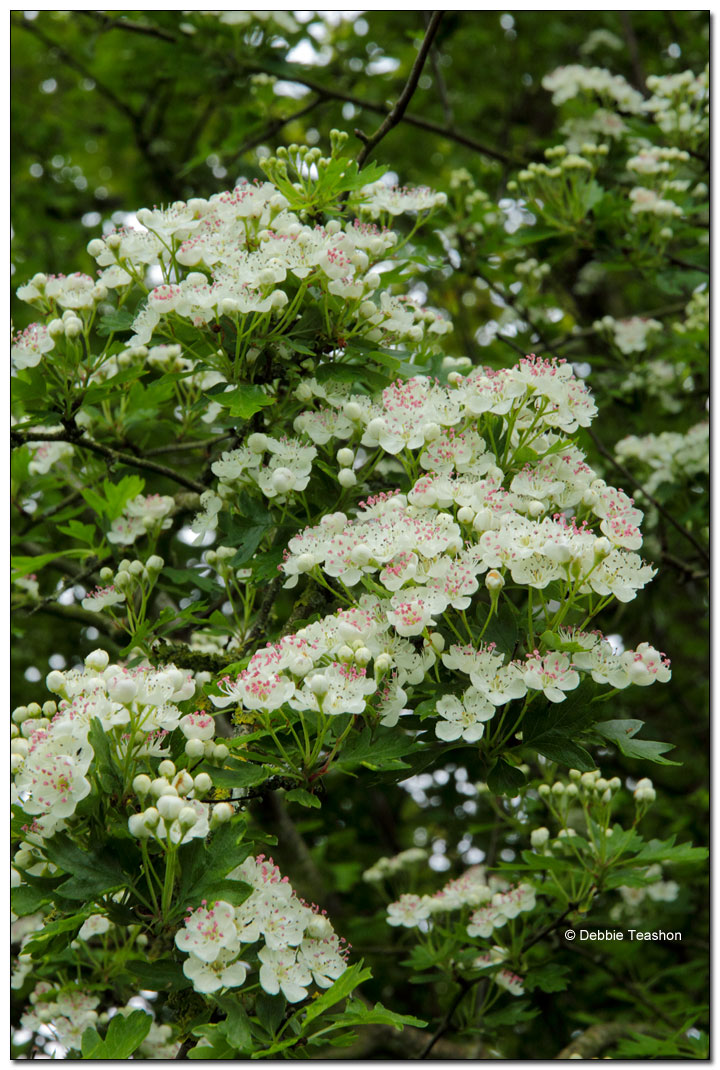
As I retrace my travels through Iceland, Ireland, and Wales, I have to give a moment to the magical hawthorn trees (Crataegus monogyna) I first encountered at Killiane Castle in Wexford, Ireland. My first encounter commonly known in Ireland as whitethorn, I recognized it immediately. Wandering the castle’s farmland weaving through hedgerows felt as if I crossed into the realm of magic.
I did not find a pot of gold beneath the Hawthorn trees. They stand, fiercely protected by the faeries, between our world and the otherworld, and you risk bad luck as punishment for cutting them down. Called the fairy tree, they kept their secrets well. I never glimpsed a fairy but perhaps I sensed their elusive presence.
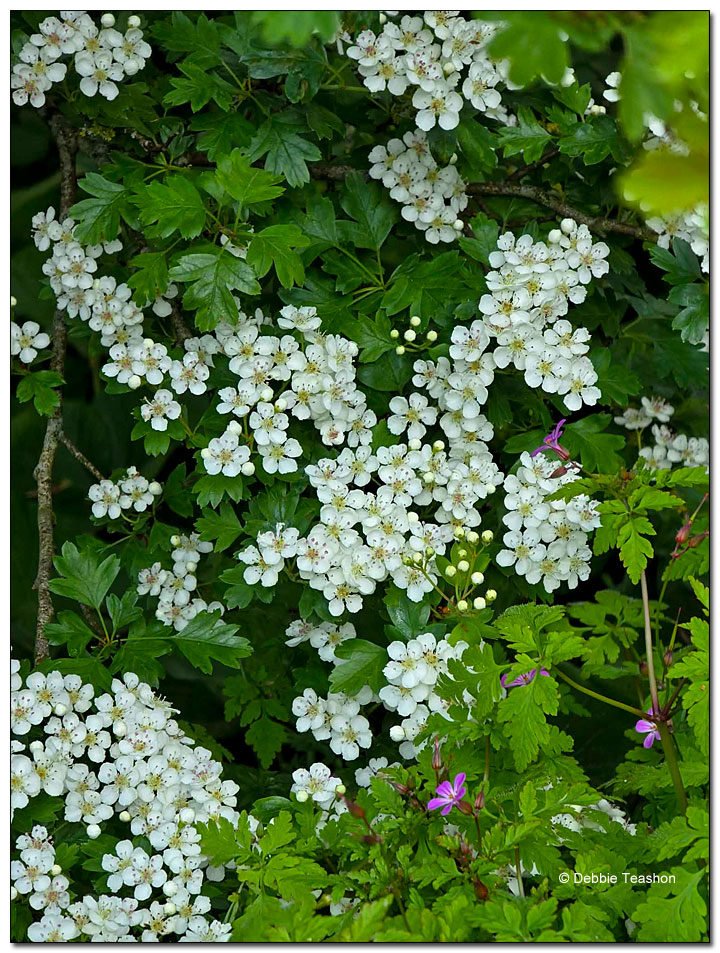
Exploring the castle on May Day morning, I walked through one of the many hedgerows that crisscross the Irish countryside. There, I discovered them covered in full bloom.
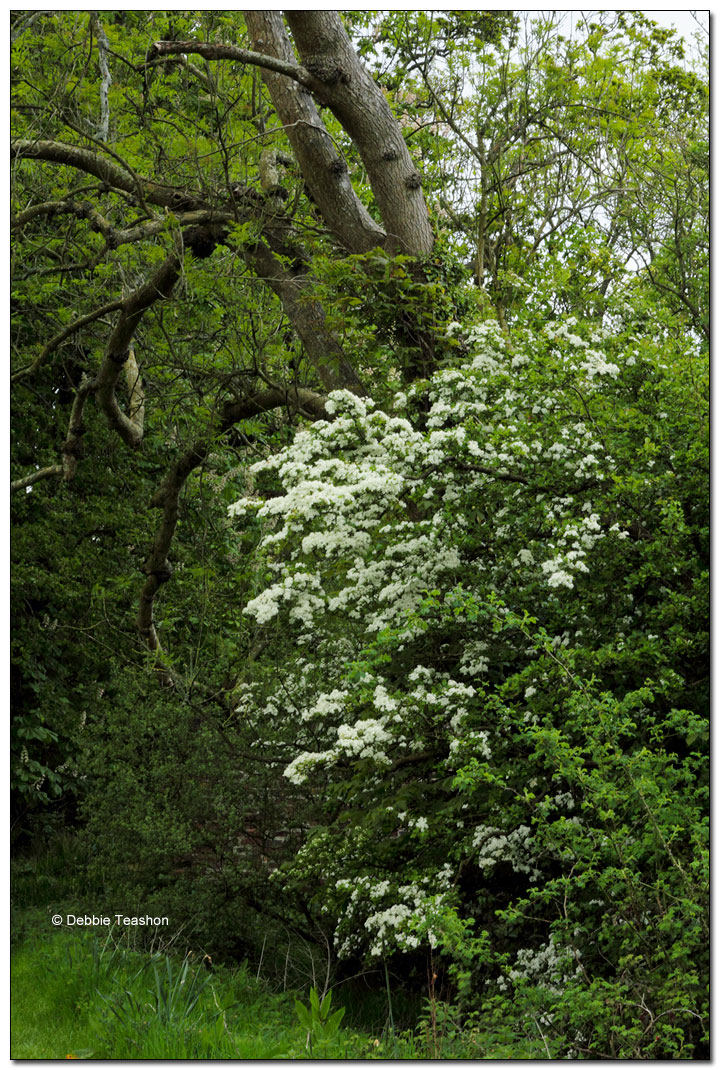
Though the faeries remained shy, the Hawthorn trees in the hedgerows demanded attention to their snow-white blossoms unfurled and revealing their pink pollen sacks. Coincidentally, May Day is the only day tradition allows you to pick flowering branches without risk of misfortune. The Irish brought the flowers inside that day and tucked them into dressers, believing the blossoms held power to ward off evil.
Back in the Pacific Northwest, I barely paid attention to hawthorn trees, knowing them to be weedy in our mild, maritime climate. However, I remember their wicked thorns. The native Irish trees first came to my awareness and appreciation when I watched Dare to Be Wild, the story of Irish landscape designer Mary Reynolds and her journey to creating a wild garden at the Chelsea Flower Show. Raised among hawthorns on her family farm, she honored them by encircling her award-winning garden with them. Her philosophy resonates with my own journey. Naturally, I had to see the film, even though I knew it took creative liberties to spice up the tale.
The rich folklore woven around these trees is as important to the land’s ecology as the trees themselves. Their blossoms serve as a much-needed food source for pollinators during the lull of flowers between spring’s end and summer’s arrival. Later in the warm season, the trees’ fruit provides a late food source for birds. The thorny branches shelter nests and wildlife hidden deep within. The lore helped save many trees from destruction.
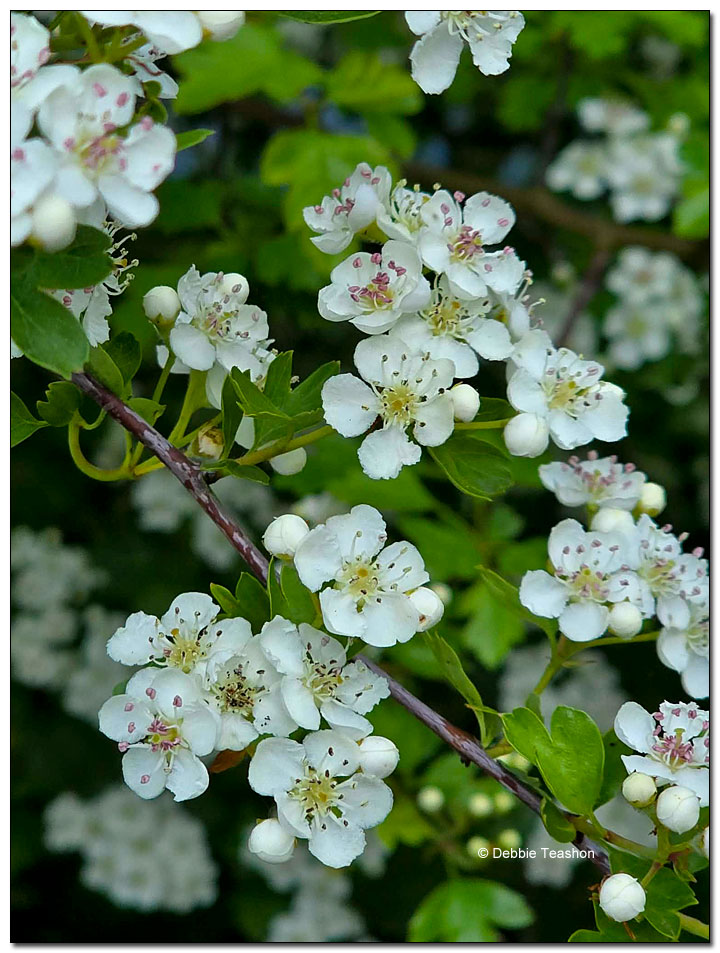
You see, it is bad luck to cut down a hawthorn tree. Oftentimes, you will see a solitary hawthorn in a field, or where humans rerouted roads or pathways around the trees rather than cut them down. The hedgerow corridors where wildlife thrives are full of these native trees, left intact because cutting one down could disrupt the faeries. Lone trees are often thought of as fairy trees. People hang ribbons on these trees to make wishes. Pink ribbons for love, blue ones for protection, a green one for wealth, or a purple one to gain spiritual knowledge.
I have a new appreciation for these trees in their native homelands, and I am grateful for the privilege of seeing them in their full, blossoming glory. I pay homage to their importance in the ecology and the lore that surrounds and protects them—a special thank you to the faeries who allowed me to walk amongst these special trees.
I’m not writing this story in order, or all together, as I interrupt with other events, or shiny objects. If you wish to follow just the travel story, click on the “Europe 2026” tag below to connect to this journey of Iceland, Ireland, and Wales.
I would love to see your comments!