
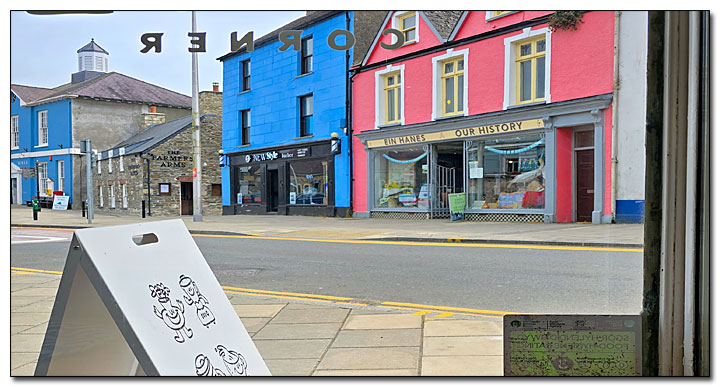
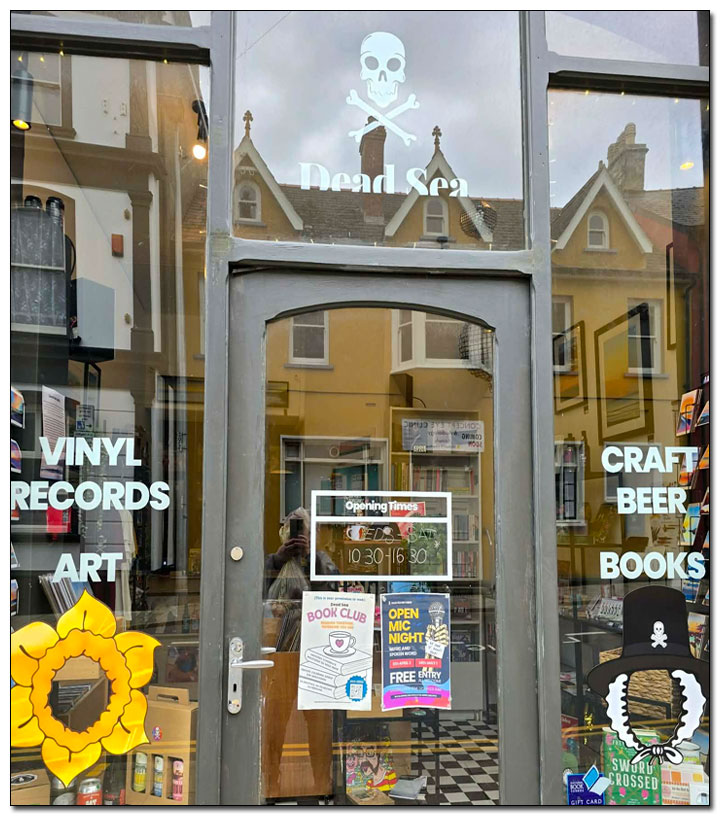
Before I get to the research part, I want to give a shout-out to the Dead Sea Collective, a charming shop I found in Fishguard, Wales. They also have another store in St. David’s, too. The Dead Sea Collective is a space where four compatible businesses share a home.
༄ ༄ ༄
Intrigued that a small store carried vinyl records, books, art, crafts, and beer, I had to go in.
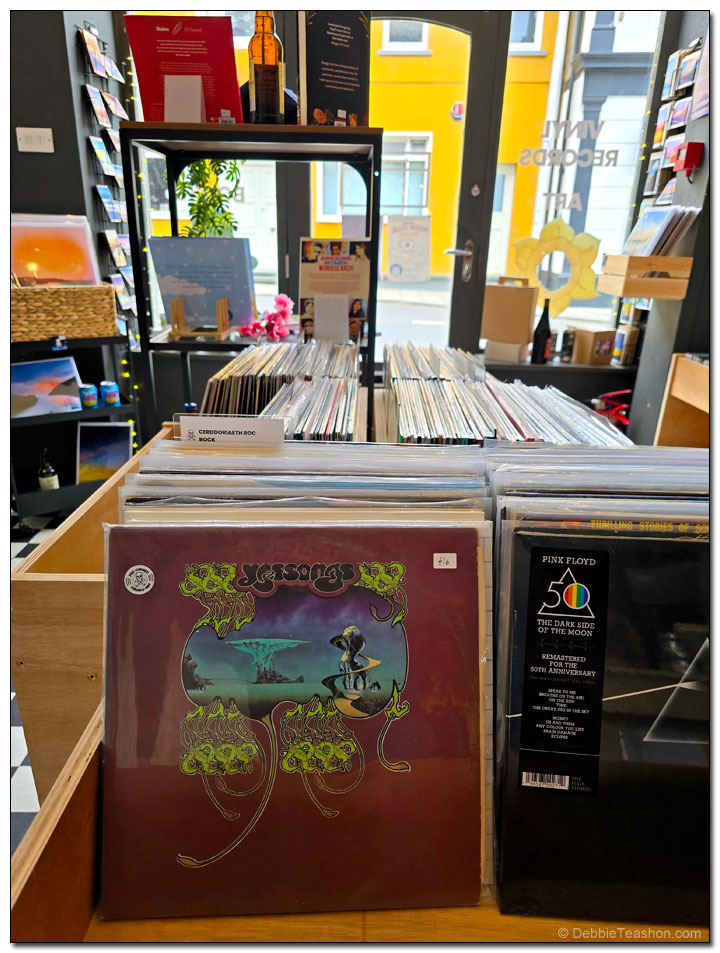
In honor of my daughter-in-law’s habit of running her fingers across stacks of vinyl records, seeking her father’s labels whenever she visits a record store, and placing them at the front of the vertical stack. I followed her lead, found one, and pulled it to the front. A habit I now indulge in too, in honor of her late father. The album I found was “Yessongs,” by Yes.
༄ ༄ ༄
All right, on to the whole purpose of my trip to Wales → Research!
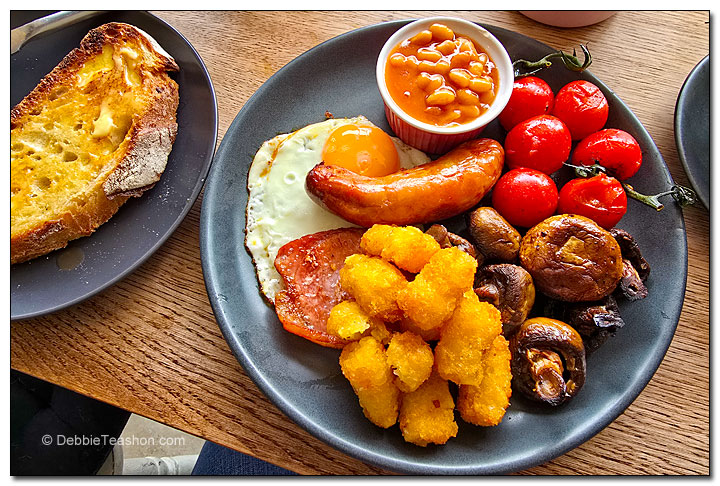
Of course, I had to fortify myself with a proper Welsh breakfast. Very similar to the Irish breakfast, but they added baked beans to the protein mix. Hardy, delicious, and with enough protein that if you ate only one meal a day, it would get you through without hunger pains.
There I was staring at sausage, egg, ham, mushrooms, tomatoes, French bread, tater tots, and baked beans in a bowl they offered for breakfast. I asked them to hold the black pudding.
I wondered how baked beans, an American comfort food, became part of a Welsh breakfast. They’re included in what is considered a full English, full Irish, full Scottish, or full Welsh fry-up, or Ulster fry.
༄ ༄ ༄
Originally, Native Americans of Turtle Island (North America) introduced baked beans. They baked them in earthenware crocks, added maple syrup, and sometimes meat such as venison, and occasionally added bear fat to the mix.
It turns out a German named Herr Heinz went to the UK and, long story short, introduced the dish to Europe, where it became popular as a breakfast item. I had to go to Wales to experience baked beans for breakfast firsthand.
As an aside, I recently learned that Bush’s Baked Beans is made in America and is an American-based private company. I add this because, like me, you are trying to buy from private companies that make their products in the States. I would definitely buy a brand made on tribal lands if I found one.
༄ ༄ ༄
Yes, I buried the lead. Purposely. The whole point of this story is the reason I traveled to Wales.
Although research was the reason, it is also the smallest part of my travel tales. I mean, how many details can you give in a story without putting everyone to sleep or giving away the novel’s premise? That will come later. I mean the details, not the putting everyone to sleep. Oh god, no.
Did I need to stay as long as I did? Yes, because being in the neighborhoods, walking the streets that are part of the past, and being with the people gives the culture and people flavor that armchair research can’t. Sitting inside a building wouldn’t let me see where my characters walked, lived, and loved. I wouldn’t smell the crisp sea air, or the wildflowers along a Welsh coastal path. I couldn’t stand under tree canopies, or come to know the noisy antics of a jackdaw, a bird similar to a crow.
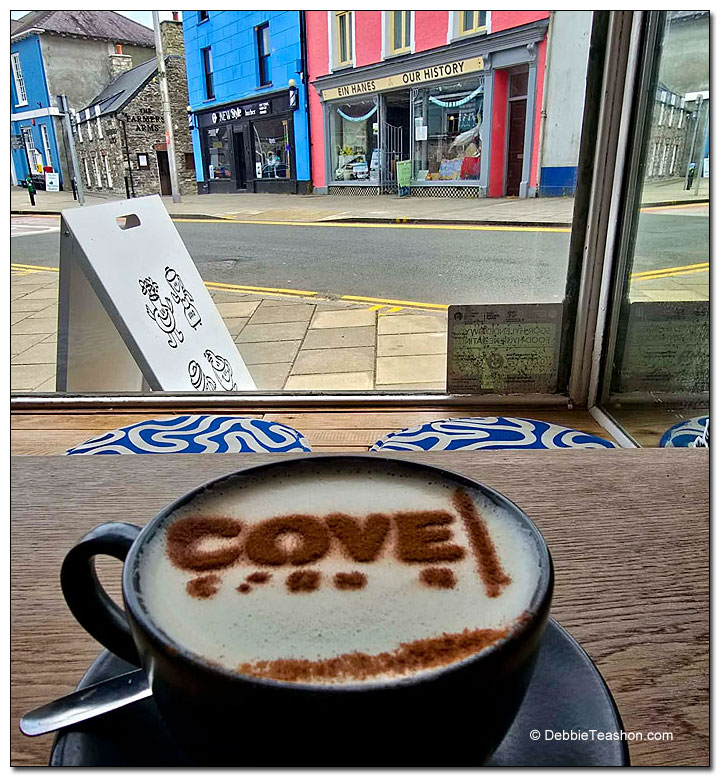
Right across the street on the Market Square, where I went for my chai lattes and breakfast, was the heritage center for the twin towns Fishguard and Goodwick, called Eine Hanes — Our History. They display a host of historical material about the area. While dining in The Cove, I looked at it for a few days before I realized I needed to go there. I’m so glad I spotted it, staring at me through the plate-glass window.
Inside, I found a most helpful woman who led me right to the information I sought.
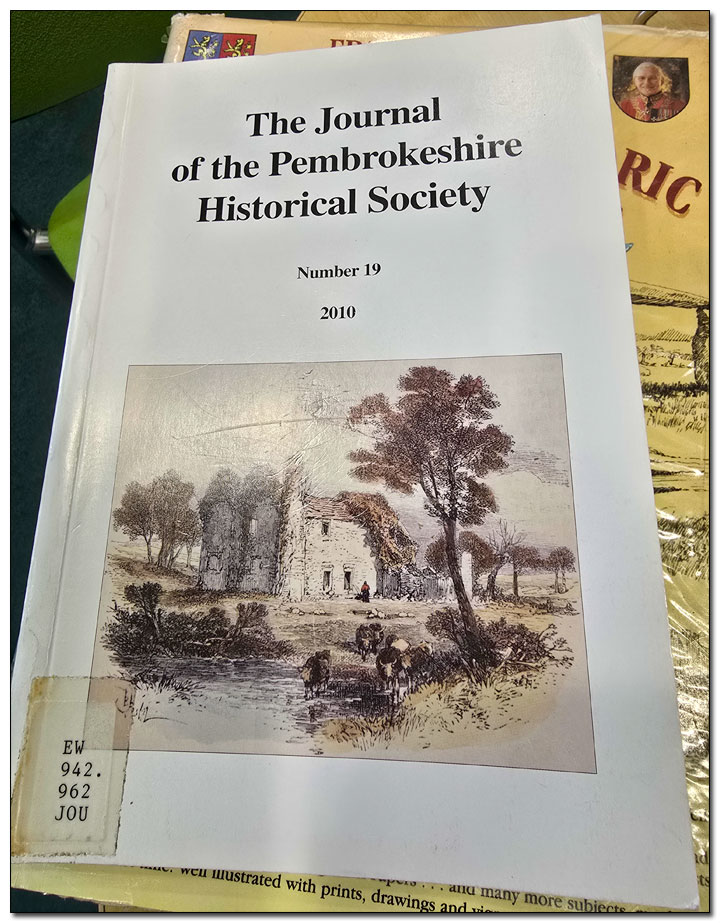
She allowed me to photograph pages of the information I found. I read it later at home. One booklet became particularly helpful in my research.
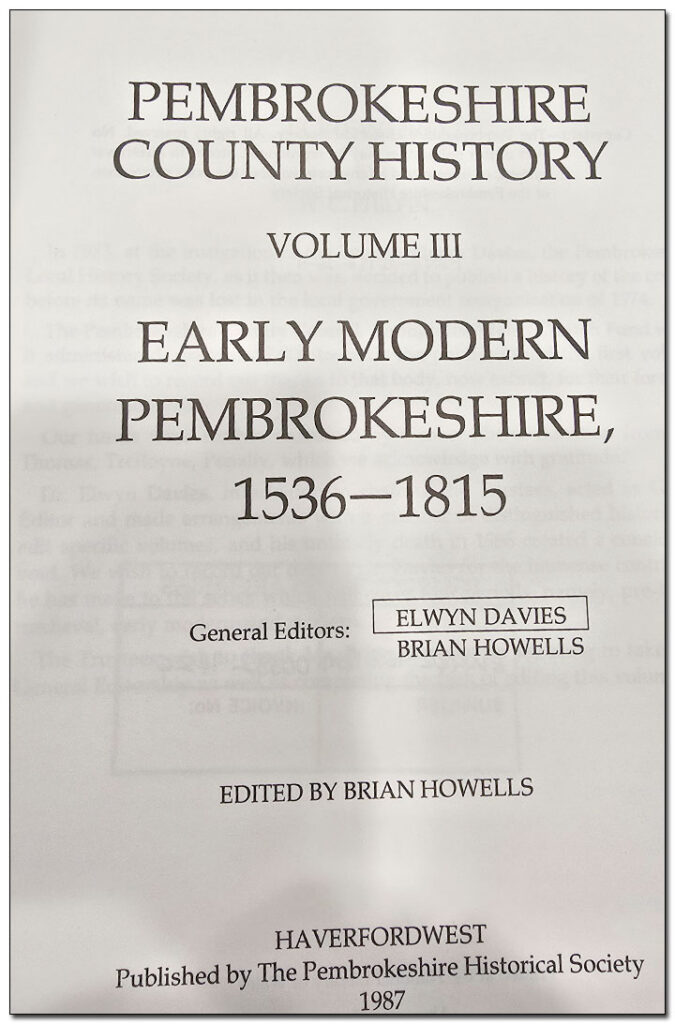
Even though my story includes magic and magical beings, I am keeping it historically accurate and capturing the flavor and lifestyle of the Welsh people. One of my questions was answered quickly: Did women have the autonomy to own property during the story’s timeline? Happily, I ticked that off, along with other questions on the list. I came to the right place.
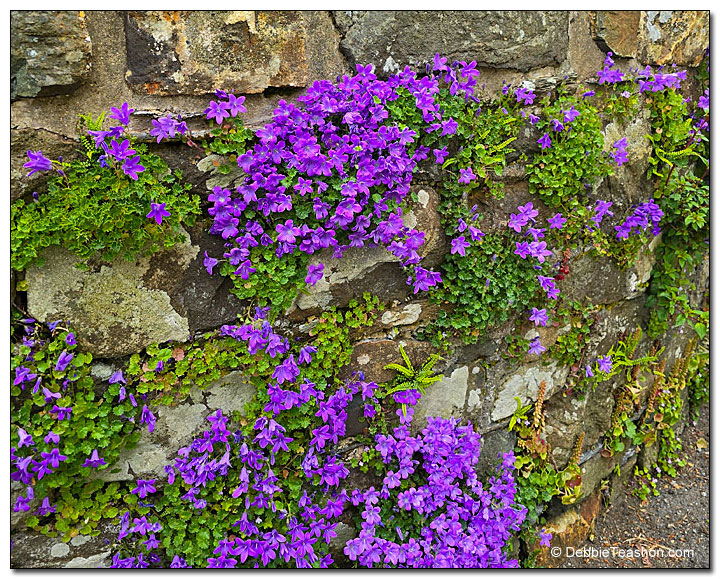
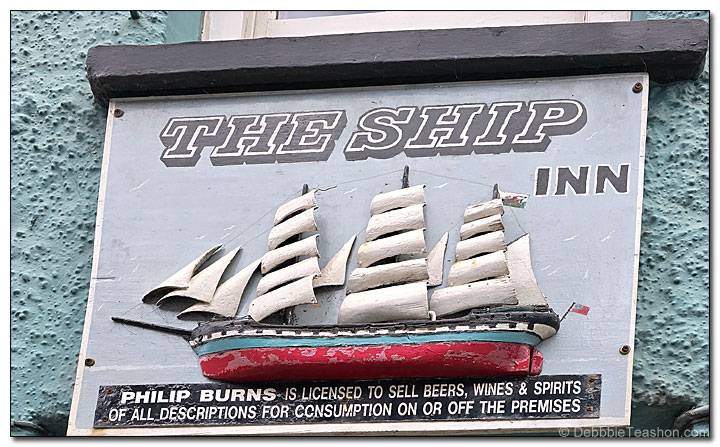
Chatting with the volunteer, I learned she lived in the neighborhood where I stayed in lower Fishguard. In fact, I had photographed her rock wall overflowing with purple bellflowers in full bloom that morning as I walked to the bus stop to catch a ride to Upper Fishguard. We had a pleasant chat about the neighborhood and the surrounding countryside. She recommended that I visit the pub, The Ship Inn. Remember the narrow street in a previous post? The one step, two step, three step, splat? Yes, that one.
༄ ༄ ༄
༄ ༄ ༄
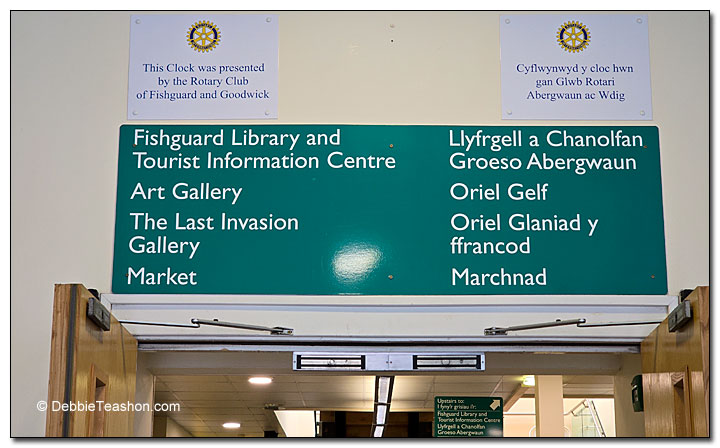
After gathering the information I needed, I walked a few doors down to the Town Hall, where they also housed the library. I explained what I needed to the librarian, who helped me find the books. She also allowed me to photograph the pages I wanted to take with me for further reading. After many hours there, I completed what I came for that day.
I must interject how much I love librarians; they are treasures in our communities. I hope we never lose them.
༄ ༄ ༄
I’m glad I chose Pembrokeshire in Wales, as it came close to my vision in the story. I feel lucky that, in researching which part of the country I needed to visit, I chose the right one.
The library has a gallery purposely built to exhibit a tapestry the townspeople made in honor of a historical event called The Last Invasion. The event fell outside my story’s timeline, but I still found it compelling. In America, we wouldn’t be taught something on this scale, so museums are wonderful places to learn what shaped a place through its heroes. And this event has quite a few heroes. What’s refreshing is that they include some badass women in the lineup.
༄ ༄ ༄
༄ ༄ ༄
༄ ༄ ༄
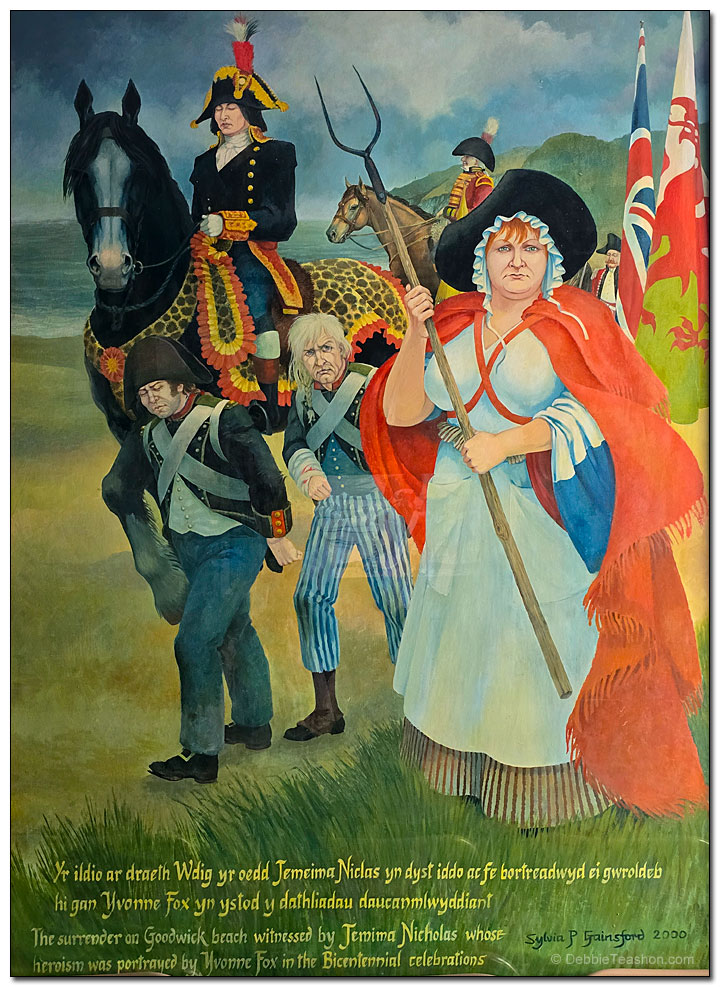
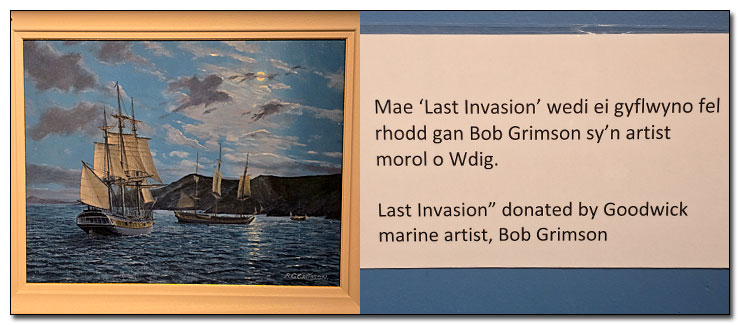
The tapestry begins on February 22, 1797, when French ships led by Colonel William Tate approached Fishguard. When the ships entered Fishguard Bay, Fishguard sounded an alarm. The French pillaged the farms and Llwanda Church. If interested, you can read the full account on their site: https://lastinvasiontapestry.cymru/last-invasion-history.
༄ ༄ ༄
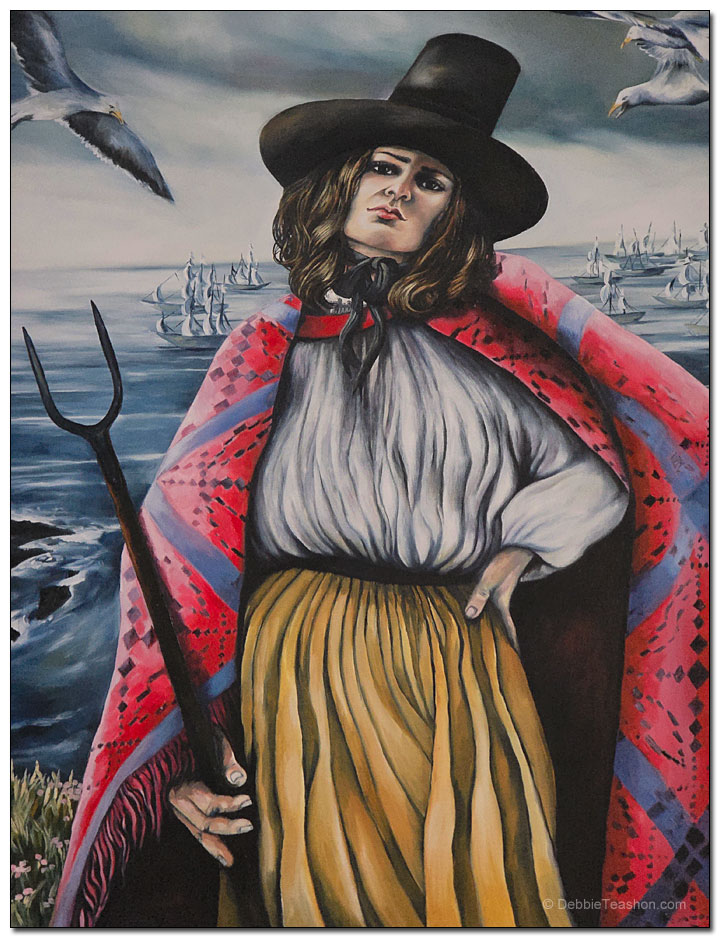
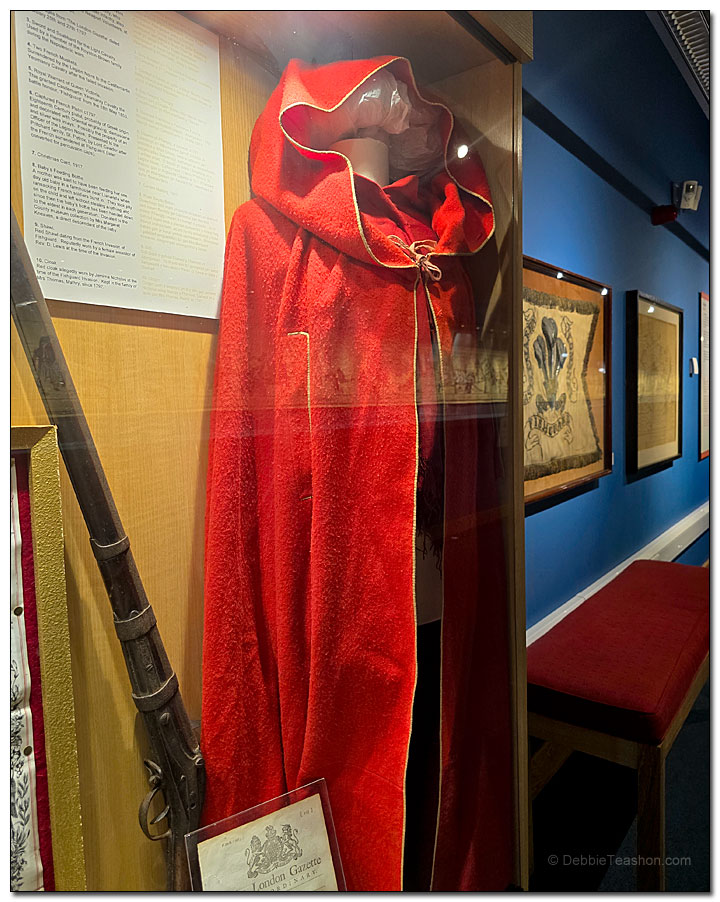
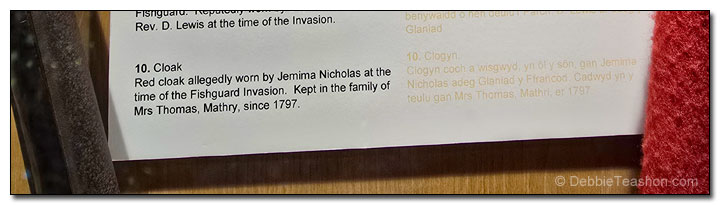
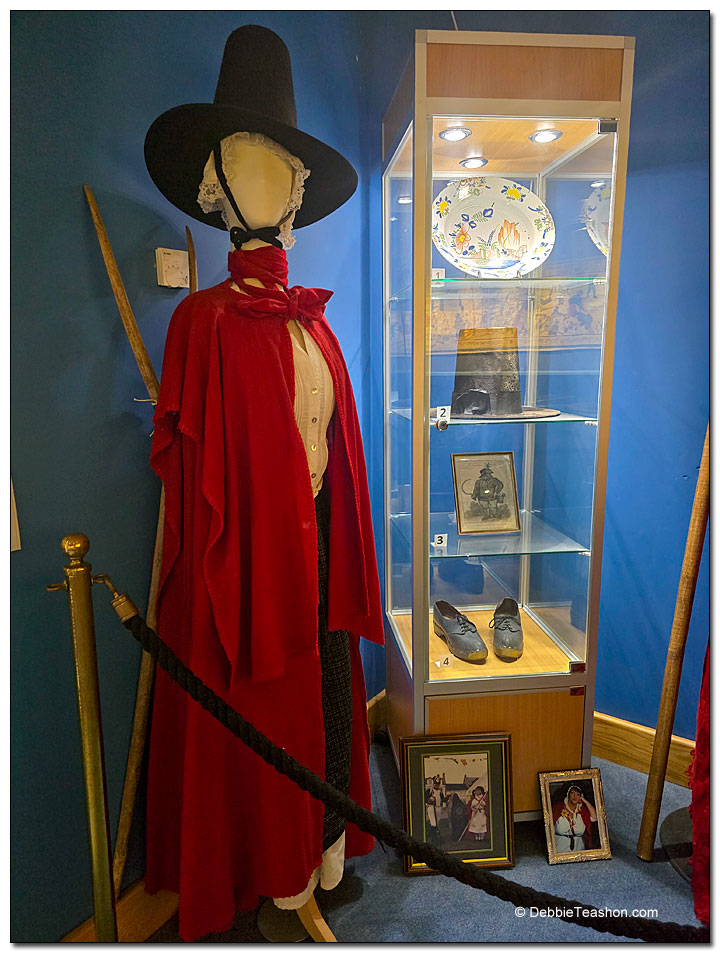
Walking down the gallery from panel to panel, I watched the story unfold in the needlework that a group of women lovingly stitched into the fabric. What I loved about this story is the local heroine, Jemima Nicholas, who allegedly single-handedly captured 12 French soldiers and secured them in St Mary’s Church. This is across the market square from the library.
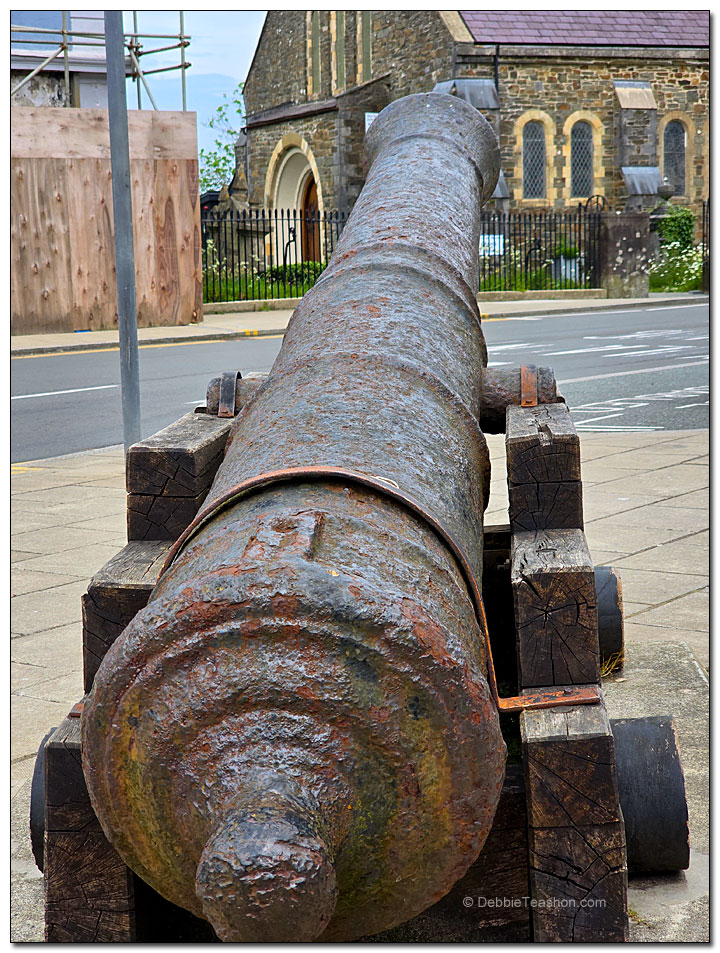
When I left the library, I photographed the cannon pointed directly at the church, and I wondered why they displayed it that way. I know it’s not a working cannon; it’s still disconcerting.
༄ ༄ ༄
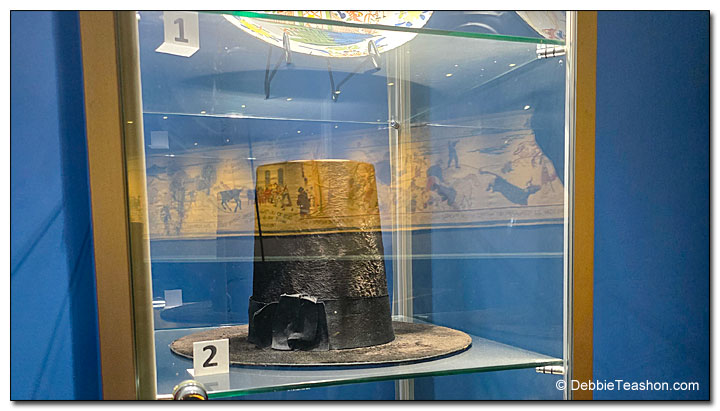
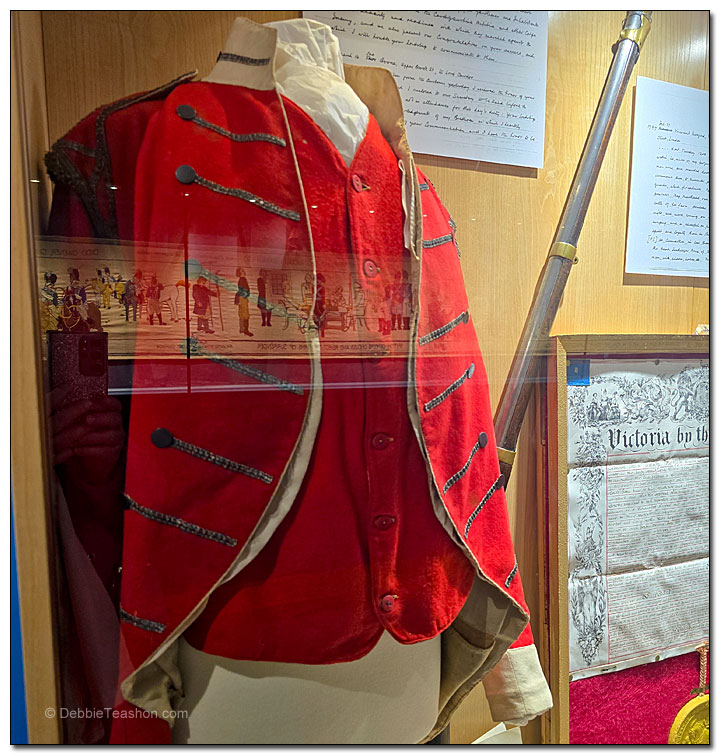
You aren’t allowed to photograph the tapestry, which I honored. Still, I would have loved to photograph its full one hundred-foot length and some close-ups of the needlework in that long, tunnel-like gallery where the tapestry traversed. I caught a few reflections of it while photographing other portions of the exhibits behind glass. I left a link to their site that shows some great photos of the tapestry.
༄ ༄ ༄
“The Last Invasion Embroidered Tapestry is 30 metres / 100 feet long by 53cm / 21 inches deep and took four years to complete. It was commissioned by the Fishguard Arts Society as a permanent legacy of the Bicentenary Commemorations. It is now owned by a charitable trust – Fishguard Invasion Centre Trust Ltd.
The Tapestry was designed by Elizabeth Cramp and the embroidery advisers were Rozanne Hawksley, Eirian Short and Audrey Walker. Seventy-eight local people helped to make it. It was designed in a simple format and is the same depth as the Bayeux Tapestry, (which tells the story of the 1066 Norman Invasion). The embroidery stitches are mostly the same as those used by the medieval embroiderers. 178 shades of crewel wool were used and subtle colour changes indicate late winter days, night-time or candle light.
༄ ༄ ༄
Historical facts and popular legends combine with Elizabeth Cramp’s sense of humour and eye for detail to provide an imaginative interpretation of a little known, but significant, moment of Welsh and British history.” https://lastinvasiontapestry.cymru/the-tapestry
This site has a good photo that showcases its length. https://lastinvasiontapestry.cymru/our-gallery
༄ ༄ ༄
I’m not writing this story in order, or all together, as I interrupt with other events, or shiny objects. If you want to follow just the travel story, click the “Europe 2026” tag below to connect to my journey through Iceland, Ireland, and Wales.
I would love to see your comments!